Sleep Science & Materials
A Practical Guide to Organic Crib Sleep Surfaces: Fit, Materials, and Care
A crib mattress is a small piece of household architecture with an unusually serious job. It must fit its frame closely, remain firm and flat, and be easy to keep clean. Organic materials and certification labels can help explain what a mattress is made of, but they do not replace the fundamentals of a safe sleep setup.
Published November 8, 2026
In the nursery, many decisions arrive disguised as questions of taste. Should the room be warm or cool? Should the sheets be plain, patterned, or the color of an oat biscuit? Should the blanket be knitted by a relative, bought in a shop, or left out altogether? The crib sleep surface is different. It is not primarily a decorative choice, nor a place where softness can be allowed to stand in for comfort. For an infant, the bed’s most important qualities are less romantic: a firm, flat surface, a close fit inside the crib, and a clear space without loose bedding or cushioning.
The word organic can make a mattress sound like a complete solution. It is not. It may describe particular fibers or the way some materials were produced, and it may be supported by a certification with a defined scope. It does not, on its own, establish that a sleep surface fits a particular crib, meets all applicable requirements, or is appropriate for every infant. A thoughtful choice begins with measurements and construction, then considers materials, labels, and care in that order.
This guide is intended as general information, not a substitute for current guidance from a pediatric health professional or product-safety authority. Safe-sleep recommendations and product standards can vary by jurisdiction and change over time. Check the instructions supplied with the crib and mattress, and consult the relevant public-health and consumer-safety guidance where you live.
Start with the crib, not the label
A crib mattress and its frame are a pair. Each may be well made on its own, yet the combination can still be unsuitable if dimensions, shape, or support do not match. Begin by identifying the crib model and its required mattress size. Follow the manufacturer’s instructions rather than assuming that two products described as “standard” will necessarily fit one another. Measure the usable interior of the crib and confirm the mattress dimensions before purchase; a label is useful, but a direct check is better.
The mattress should rest securely on the crib’s support and lie flat. Pay attention to gaps along the sides and at the corners. A mattress that is too small can leave spaces where an infant could become trapped. A mattress that is too large, or one with an unusual shape, may buckle, bow, or fail to sit evenly. If you can see an obvious gap, if an edge lifts, or if the mattress does not settle into the frame without force, stop and check the product instructions or contact the manufacturer. Do not improvise a fix with folded cloth, foam, extra padding, or a homemade insert.
There is no universal household test that can certify a mattress as safe. Some parents hear about measuring gaps with fingers or attempting to press down on the center. Such checks may reveal a mismatch, but they do not replace the crib and mattress manufacturers’ specifications or official safety guidance. The useful principle is straightforward: use a compatible mattress that fits closely and lies level, and do not alter either product to make them fit.
- Confirm that the mattress is intended for the specific crib size and configuration.
- Check that it rests evenly on the support and does not shift, tilt, or bow.
- Inspect the perimeter and corners for visible spaces or an insecure fit.
- Recheck the setup after adjusting the crib support or moving the crib.
Dimensions matter beyond the first day. Some cribs have adjustable mattress-support heights, and the mattress may be moved as an infant grows. Follow the crib instructions when changing the support position. A fitted mattress should remain stable after the adjustment; if the frame or support has been altered, inspect the fit again before use. Keep the manuals and model information somewhere accessible. In the soft-focus world of nursery planning, the instruction booklet is not a glamorous object, but it is often the most useful one.
Firm, flat, and free of added cushioning
“Firm” is sometimes mistaken for a verdict on whether a mattress feels pleasant to an adult’s hand. It is better understood as a functional property of the infant sleep surface. A crib mattress should be firm and flat, without a plush, pillow-like layer that can conform around a baby’s face or body. Pressing a hand into a mattress cannot establish safety by itself, and adults may find an appropriate infant mattress surprisingly hard. That sensation is not a reason to add a soft topper.
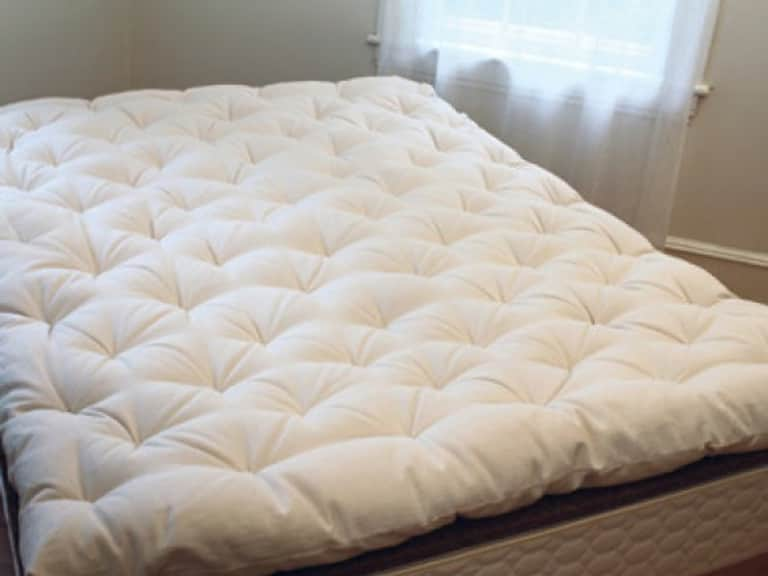
A mattress protector or pad may seem like an innocent compromise: a little extra softness, a little insurance against spills. In a crib, extra layers deserve particular caution. Use only products permitted by the mattress and crib manufacturers and consistent with current safe-sleep recommendations. A fitted sheet should fit snugly and remain secure. Do not add a pillow-top pad, quilted topper, loose blanket, sheepskin, positioner, or other cushioning to soften the surface. Avoid products that change the mattress’s shape or create gaps at the edges.
For infant sleep, the usual safe-sleep baseline is a firm, flat, separate surface intended for the child, with the infant placed on their back and the sleep space kept clear of soft objects and loose bedding. Details of official recommendations may differ by country, and families should refer to the current advice of their local health authority. The general lesson is not complicated, even if product marketing can make it seem so: a nursery surface is not improved by adding more layers.
It is also worth separating two questions that are often bundled together. One is whether the material is organic or made with particular fibers. The other is whether the finished product is designed and labeled for infant use and compatible with a particular crib. A material claim cannot answer the fit question; a good fit cannot certify a material claim. Evaluate each on its own terms.
What “organic” can—and cannot—tell you
Organic cotton is a description of agricultural sourcing, not a complete description of a finished mattress. A product may include a cotton cover, a cotton batting layer, or a blend of materials. The proportions, processing, stitching, backing, and any coatings or finishes can vary. Read the full materials list and look for clear explanations of which components are included in a claim. If a description says “organic cotton,” ask whether that refers to the cover, the fill, or both.
Certification labels can make this investigation more manageable, provided they are read as specific statements rather than all-purpose seals of approval. GOTS, or the Global Organic Textile Standard, applies to qualifying textile products and supply chains under its own criteria. Its scope concerns textile processing and related requirements, including organic fiber content and certain environmental and social considerations. It is not, by itself, a certificate of crib fit, infant sleep safety, or mattress performance. The exact claim should be checked against the certification’s published rules and the product’s documentation.
Other labels may address different issues, such as restricted substances or chemical testing. Their meaning depends on the organization, standard, product category, and version of the criteria. The presence of a certification name in marketing copy is not always enough to determine whether the entire finished item is certified. Look for the name of the certifying body, a certificate or license number where applicable, and a description of the product or components covered. When in doubt, consult the certifier’s own directory or ask the manufacturer for documentation.
Terms such as natural, non-toxic, chemical-free, and eco-friendly are broad and can be used inconsistently. “Chemical-free” is especially imprecise: all physical materials are composed of chemicals, and the phrase does not identify what has been tested or excluded. Better information is concrete. A useful materials disclosure names the fibers and other components, says what part of the product each refers to, and explains which standard or test supports a claim.
A practical reading of a label: treat certification as evidence about a defined set of criteria, not as a substitute for the mattress’s dimensions, intended use, construction details, or care instructions.
Cotton, wool, and the details of construction
Cotton is common in nursery textiles because it can be woven into familiar, washable covers. Its performance depends on more than the word on the label. Weave, thickness, stitching, backing, and how the cover is attached all affect how a product handles ordinary use. A breathable fabric may be a welcome characteristic, but no fabric description overrides the need for a firm, flat crib surface or an appropriately fitted sheet.
Wool is often described as naturally temperature-regulating and moisture-managing. Those qualities may be relevant in textile discussions, but they do not make every wool-filled product suitable for a crib. A wool layer can add loft or cushioning, and any topper or pad that changes the sleep surface needs careful scrutiny against current infant-sleep guidance and the product instructions. Do not infer that a material is appropriate for an infant simply because it is natural, breathable, or used in adult bedding.
Foam, latex, springs, and other mattress constructions raise their own questions of composition, firmness, durability, ventilation, and maintenance. There is no need to turn a crib purchase into an amateur materials-science examination, but clear documentation matters. Look for a manufacturer that identifies the product’s intended use, gives complete dimensions, explains its construction in understandable terms, and provides care instructions that can actually be followed. If the information is vague, ask before buying.
Some parents are concerned about allergies or sensitivities. A claim that a material is hypoallergenic does not guarantee that an individual child will have no reaction, and it should not be taken as medical advice. If an infant has a diagnosed allergy or a specific health concern, discuss suitable materials and cleaning practices with a qualified clinician. In the meantime, a simple, clean, correctly assembled sleep space is easier to assess than a crowded one layered with products carrying overlapping promises.
Care should be part of the decision
Parents do not need a mattress that demands ritual. They need to know what to do when a leak, spit-up, or small domestic mishap occurs at 3 a.m. Before bringing a crib mattress home, read the care instructions for the mattress itself and for any cover or fitted accessory. These may have different rules. A removable cover might be washable while the underlying core must not be soaked. A wipe-clean surface may have restrictions on cleaners. The label attached to one component does not necessarily describe the other.
Use only the cleaning method the manufacturer permits. Avoid soaking a mattress core, applying an unapproved disinfectant, or using heat when the instructions prohibit it. Strong household cleaners and fragrances can leave residues or damage materials; “more thorough” is not always better. If a removable cover is designed to be machine washed, follow the stated temperature, cycle, and drying directions. Allow components to dry fully before reassembly and use, as directed by the manufacturer.
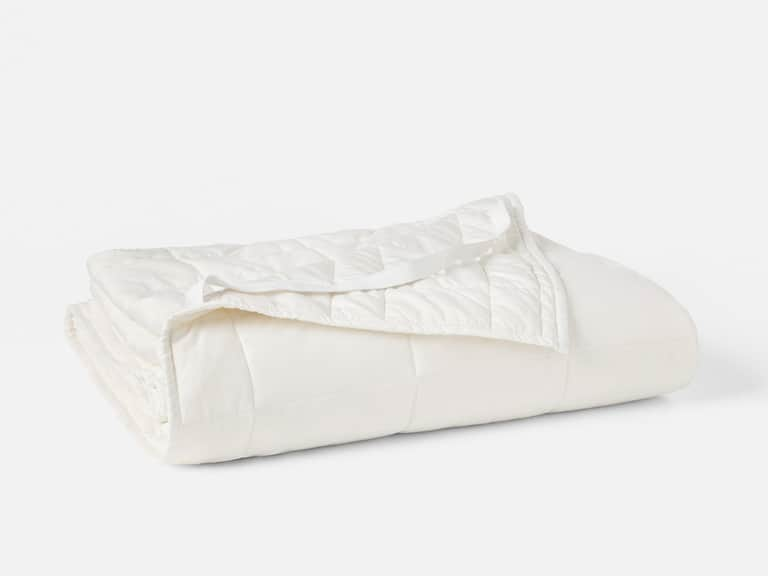
A waterproof protector can help manage accidents, but it should be used only if it is compatible with the mattress and crib and does not introduce loose fabric, bunching, or a change in surface shape. It should fit securely and be inspected regularly. If an accessory is not explicitly intended for crib use, or if its instructions conflict with safe-sleep guidance, leave it out. A fitted sheet is not an invitation to add several more fitted layers beneath it.
Routine inspection is modest work with a worthwhile purpose. Check for tears, broken seams, exposed filling, persistent dampness, unusual odors, or a cover that no longer fits. Look at the crib support and frame as well as the mattress. If the mattress has been damaged, altered, or contaminated in a way the manufacturer says cannot be remedied, contact the manufacturer or replace it rather than improvising a repair. Keep any product registration and warranty information, but remember that a warranty is not a safety certification.
A clear crib is easier to care for
There is an appealing domestic logic to preparing a nursery by adding things. A blanket gives the crib a finished look; a cushion promises softness; a little toy supplies a note of personality. Yet for infant sleep, restraint is not an aesthetic failure. It is a practical way to keep the sleep surface visible, inspectable, and uncomplicated. Use the mattress with a snug fitted sheet, and keep the crib free of loose bedding, pillows, stuffed toys, bumpers, and decorative objects while the infant is sleeping, in accordance with current local guidance.
Room temperature is a separate part of the comfort question. Rather than using loose blankets or thick layers in the crib, caregivers can choose appropriate sleep clothing and follow recommendations from health authorities. Babies should not be overdressed or overheated. If you are uncertain about a child’s temperature or clothing, ask a clinician rather than trying to solve the question by adding bedding. Comfort is important; so is keeping the sleep environment within the boundaries of established safety advice.
There may be cultural or family traditions around blankets and bedding, and they can be honored in other ways: folded on a chair, used during supervised awake time where appropriate, or saved for a later stage when the child’s sleep environment changes. A crib is a place where the virtues of the object are not measured by how inviting it appears to an adult. In this case, an empty-looking surface is a useful design feature.
A sensible checklist before use
Before the first night, take a few minutes to check the whole arrangement, not just the product description. The following list is a practical prompt; it does not replace the instructions or official safety recommendations applicable where you live.
- Compatibility: The mattress is intended for the crib, fits the specified dimensions, and is supported by the crib exactly as instructed.
- Surface: It lies flat and is firm, with no added topper or cushioning that changes its shape.
- Condition: The mattress and crib are free of damage, improvised repairs, and loose components.
- Materials: The product description identifies the principal fibers and components rather than relying only on broad claims.
- Certification: Any organic or chemical-related label is understood within its stated scope and checked against documentation where necessary.
- Care: Instructions for cleaning, drying, and using any permitted protector are available and clear.
- Sleep space: The crib contains no loose bedding, pillows, toys, or unapproved accessories while the infant sleeps.
Revisit the checklist after moving the crib, changing the support height, replacing a fitted sheet, or adding any accessory. Small changes can affect how things fit. When there is a conflict between promotional language and the product manual, rely on the manufacturer’s detailed instructions and the relevant safety authority—not on the more comforting phrase.
The quieter meaning of a good choice
An organic crib mattress may appeal to families who want to understand the source of the fibers in their home. That interest is reasonable. So is a desire for materials that are clearly documented and care instructions that suit ordinary life. But an organic claim is only one line in a much longer assessment. Fit, firmness, flatness, intended use, construction, and maintenance all matter, and no single label can stand in for the rest.
The best crib sleep surface is not necessarily the one with the most elaborate vocabulary. It is the one that fits the crib as intended, offers a firm and flat surface, is supported by understandable product information, and can be cared for without adding unapproved layers. Choose materials with care, read certification claims precisely, and keep the infant’s sleep space simple. In a nursery, simplicity is not the absence of thought. It is what remains after the important questions have been answered.